Posts about writing

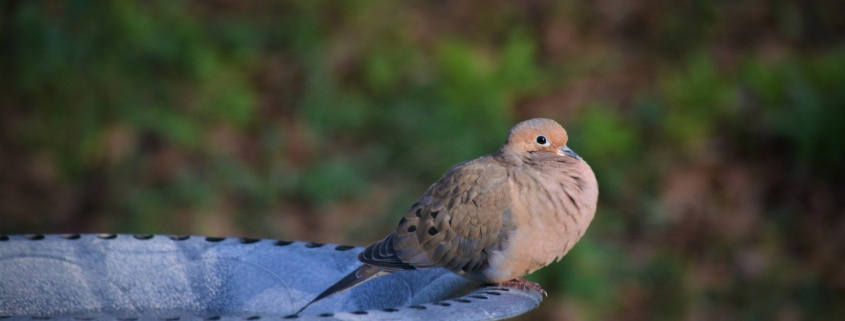
Mourning dove on a bird bath

Editing Advice: Bird by Bird

When it comes to editing advice, nothing has helped me more than Anne Lamott’s Bird by Bird: Some Instructions on Writing and Life. I blindly bought a second-hand copy in 1998 and burned through two highlighters before giving up—all of it was important. In 2018, I met Anne Lamott and was able to get it autographed. If there’s a house fire, I’m grabbing that book and the cats.

This year, all that good advice came home to roost, literally.

After decades of fighting fate, I have become a bird nerd. At the start of the pandemic, I picked up a feeder since I was writing at home 24/7. I don’t know if hobbies are more nurture or nature, but I got both barrels.

My grandfather, Henry Miller Stevenson, was a highly respected ornithologist and author of the hernia-inducing The Birdlife of Florida. Of the 970 pages, 259 are the bibliography. There are no pictures. He said that the people reading it already knew what the birds looked like. It took him twenty years to finish the book, and when he stood up to show the acceptance letter to his secretary, he dropped dead of a massive heart attack.

Kinda hoping that doesn’t run in the family.

My father, when he wasn’t teaching, preaching, or coaching, was an exceptional taxidermist. He never met a duck he didn’t love, dead or alive. I spent a lot of years sitting beside him at his taxidermy desk, watching him work and picking up enough to turn out my own wonky-looking wood ducks.

Herbert Stoddard, prominent conservationist and one-time taxidermist for the Field Museum in Chicago, was a family friend and mentor. Family lore says that after Herb taxidermied a wild turkey, one of the most difficult birds to mount, he swore he would never do one again, not even if the president asked. Shortly afterward, he got a call saying that a wild turkey had been killed by a stray golf ball at Augusta. The golfer? President Dwight D. Eisenhower.

Sometimes you do what you have to do.

When I started my backyard experiment, the squirrels immediately discovered and demolished the bird feeder which led to the Great Squirrel Retribution of 2020. While the squirrels won many battles, they lost the war. That victory led to a backyard version of the Marshall Plan in which I added a squirrel station alongside the tube feeders, seed trays, and bird baths. The cats, usually so ungrateful, haven’t stopped thanking me.

Squirrel eating a corncob at a picnic table feeding station

Premium cable package

Recently, some mourning doves (the McLovins) showed up, poking around on the ground, looking for table scraps knocked loose by the flash mob of chipping sparrows that appears without warning several times a day.
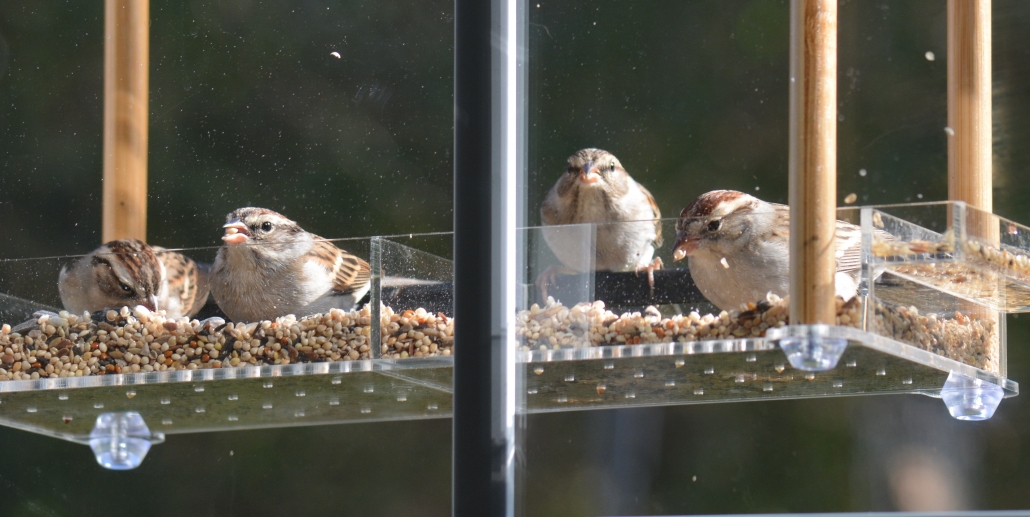
Four sparrows at a bird feeder

It’s worse than the drive-thru at Starbucks the day that pumpkin spice lattes come back.

Mrs. McLovin looks like she’s had a close encounter with a woodchipper, or maybe she has avian cancer and is undergoing especially intense chemo. She looks like something that the cat dragged in—literally. For the sake of this illustration, let’s say she’s molting.
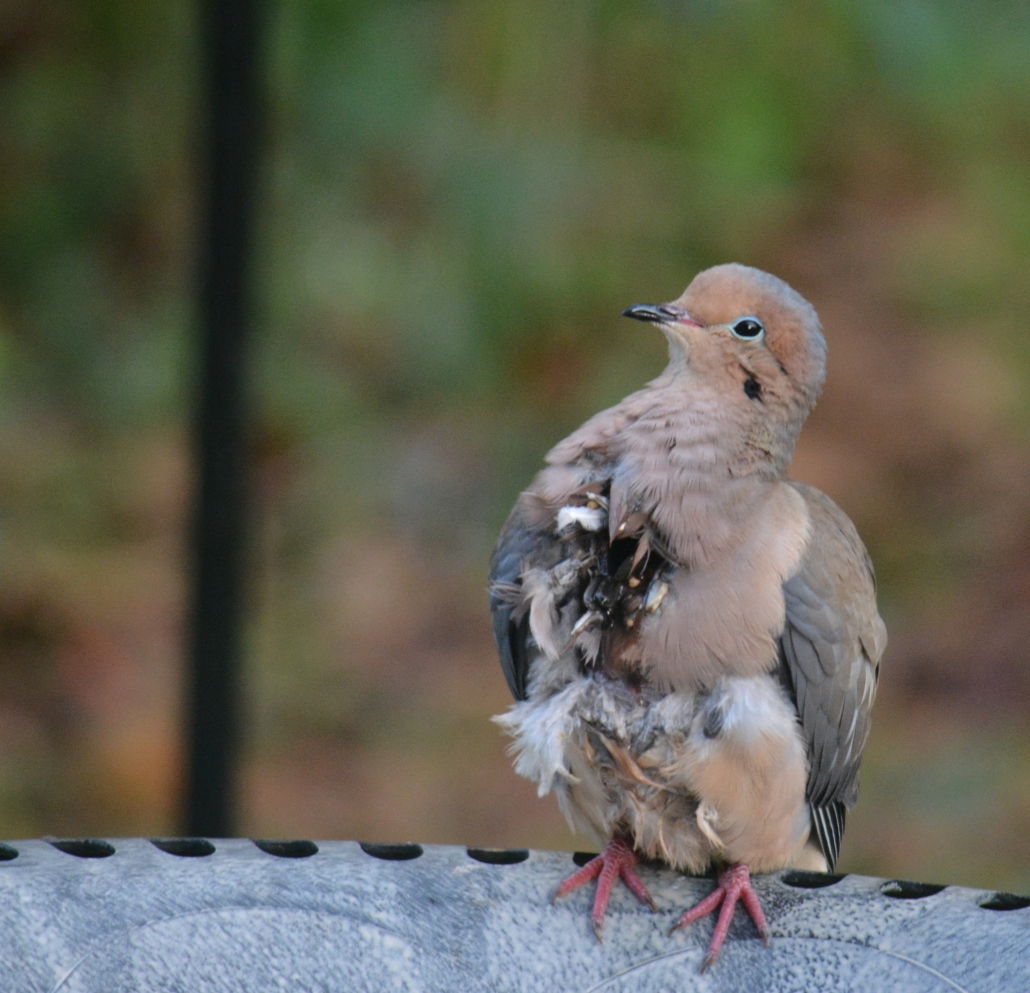
Molting Mourning Dove

Mrs. McLovin—not her finest hour.

Molting looks awful and uncomfortable because it is. Everything is itchy in places you can’t scratch. Molting birds can be aggressive and irritable, feathered little Jekyll and Hydes. In her book Arnie the Darling Starling, Margarete Corbo described Arnie as “a brilliant orator suddenly reduced by a catastrophic accident to the gibberish of infancy.”

It’s no fun, and molting isn’t limited to birds. Lizards and lobsters do it too, and when snakes molt they get extra bitey. You’ve been warned. But the most difficult and dangerous molter is a writer.

For example, you’ve spent a year writing a book, and then you realize you need to change things. Things you felt were working just aren’t. It’s not fun to realize you were wrong. It’s even less fun when you hear it from an editor at a major publishing house. Sometimes that voice at the other end of the line is Dwight Eisenhower, and you do what you have to do.
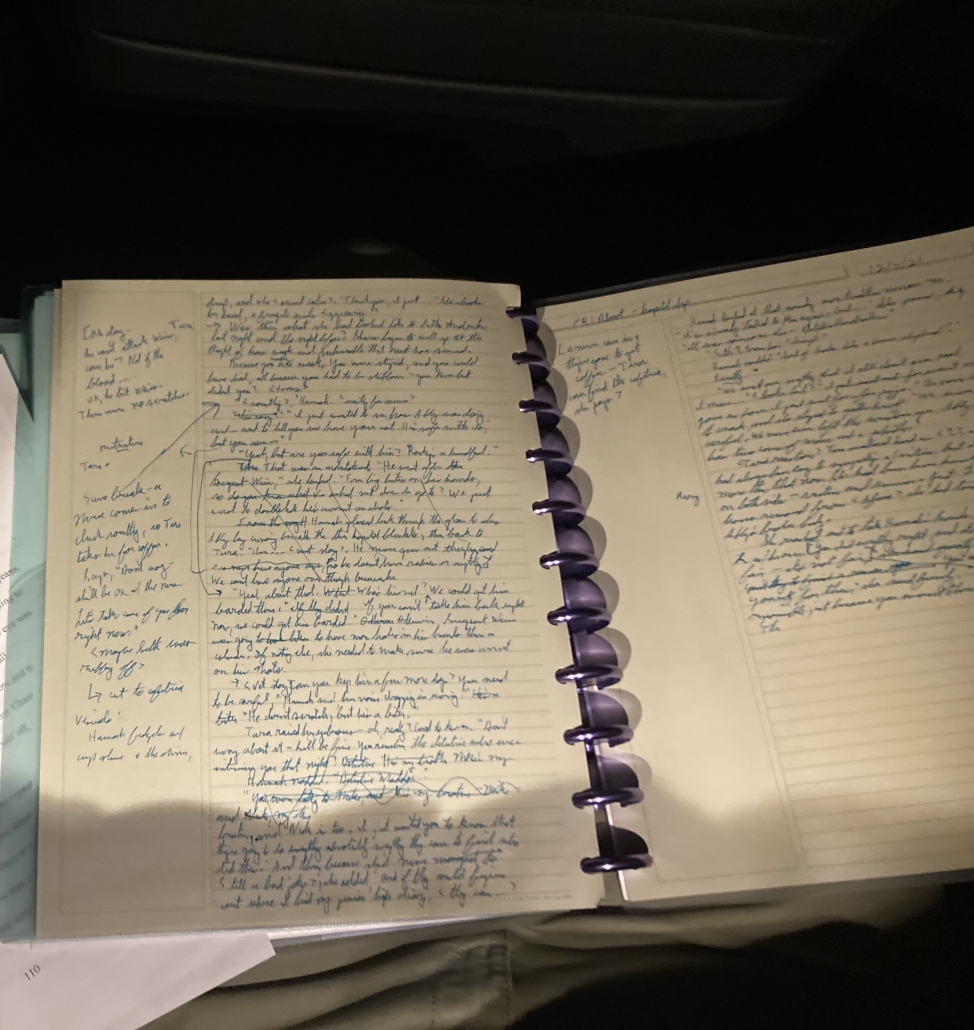
Marked-up handwritten draft

Not that I’m speaking from experience or anything.

A writer’s molt isn’t pleasant. You look awful, and you feel awful. It’s stressful to shed your skin. You have to grow these words yourself—you can’t just copy and paste any more than a bird can pick up shed feathers and glue them on. Along the way, you’re going to sulk and snap at your mate who’s perched next to you, looking absolutely spectacular at the peak of his own career.
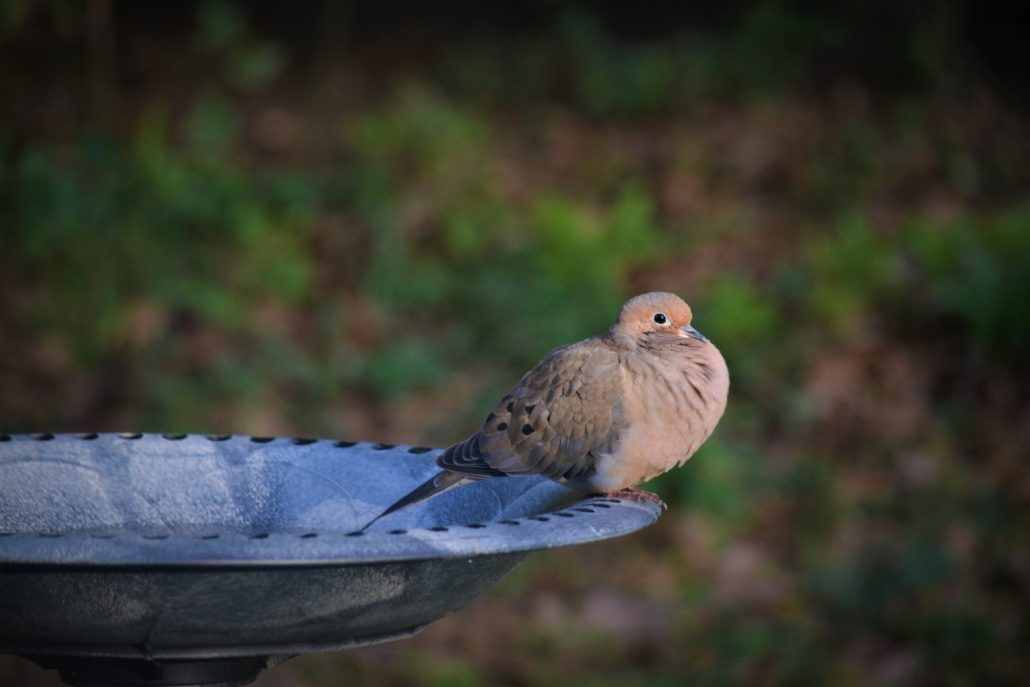
Mourning dove on a bird bath

I’m looking at you, Mr. McLovin.

But guess what? It’s natural and necessary. No one gets things right the first time. Anyone who says that you should is lying and probably deeply insecure. And even if the work was the best it could be at the time, it could be better now. The book will be stronger for it. You’ll learn things that will make the next edit—and there definitely will be one—go more smoothly. Like molting, you just have to get through the process, and that takes time.

You have to take things one day at a time, one word at a time. “Bird by bird, buddy. Just take it bird by bird.”

The Moo Shu Man

I’m in limbo at the moment — most of us are. The pandemic has strangled my business. My Dad died, and I can’t visit my Mom. I’ve finished my current novel, and it’s stuck in a review queue with TPTB. I check my email more than I should.Bike trail in forest

The one thing I still have some control over is riding my bike off road, deep into the national forest. My husband gave me a full suspension Norco for our anniversary, and for the first time in my life, I beat him to the trail junction. I was ecstatic.

And then I waited, and I waited, and I waited some more. I started to get worried when it struck me: of course — he’s the Moo Shu Man.

“Yeah,” a friend told me even before I met John, “it’s like when you order out Chinese, and you’re hungry but it’s taking a while, so you get really worried, and you obsess over every sound outside. Is that him? Is he here yet?”

That, she said, was what it was like to be single, waiting to meet someone.

“And then the driver pulls up,” she said. “And you’re like, ‘Oh yeah, of course he’s the one. I knew that. He’s here already? Of course.’”

Man on bike in forest

John was the Moo Shu Man, always late but perfectly on time.

And eventually as I stood there in the forest, now twenty years after we married, he pulled up on his bike, grinning and proud of me for beating him, and utterly unaware that I had been worried.

So here I sit now at my desk, waiting, grinding through another day, and trying not to jump at every electronic ding or check my email at 3 a.m., because when the Moo Shu gets here, it will be perfectly delicious and perfectly on time.

Writing through Sand

A lot’s happened in a year. That’s an understatement.

I should’ve been working on a follow-up novel—and I did—but leaving my job, starting a business, and dealing with the aftermath of my father’s unexpected death had to fit on the plate as well.

So the first thing I did was go mountain biking.

Hurtling down hills, ducking tree branches and roots, and leaning into curves all do one thing very well. It keeps you from thinking about anything else, which was a gift this last year.

One tricky feature of my favorite off-road track is sand—fine, pale gray sand. It gets into everything from your socks to your derailleur. If you hit it wrong, you could wind up toting your bike up a hill while spitting sand. If you don’t want to do that—and you don’t—there’s only one solution.

Don’t stop pedaling. Maintain speed, shift your weight back, set your eyes about ten yards past the sand, don’t look down, and don’t stop pedaling.

If you lose even an iota of momentum, the sand will grab your tires and torque them, tossing you into the underbrush. If you’re especially lucky, someone will be coming the other way on the trail at that very moment to share your shame.

Which is a lot like life. When the small, irritating things mount so high that you can hardly lift your feet, the worst thing you can do is shuffle to a stop. You’ll just sink under the weight of them, and then it takes twice as long to slog past a bad patch. Set your eyes past the problem, bear down, and don’t stop pedaling.

And life is a lot like writing…or the other way around. In any event, the best thing you can do is not. Don’t stop pedaling, don’t stop going, don’t stop writing.

Bike tire stuck in sand

Controlled Burn

I do a lot of off-road mountain biking, albeit very slowly. I have too much respect for how easy it is to break a bone to go flying off jumps and getting horizontal on the berm. But a two hour trek through the national forest, dodging tree limbs and fox squirrels, is the perfect prescription to clear my head.

And then came the fire.

I was peacefully hurtling through the undergrowth today when I shot out of a clearing and into the smoking aftermath of a controlled burn. The forest service does these occasionally, turning the tangled green undergrowth into acres of char. At eight miles along, it was too late to reroute the ride, so I plunged into the burn, hoping to get across without being spotted by a well-meaning forester.

I rode for miles through a landscape was nearly lunar in its gray desolation. Large pine trees will survive and thrive, but everything else is scoured off. The ride was better and faster because I could see roots and rocks that the small scrub had obscured. It doesn’t take long for the plant life to bounce back and flourish, and then bring the nutrients in the soil back into alignment. I came out the other side breathing hard, sounding and smelling like a pack-a-day smoker. I couldn’t wait to get home to take a shower, but even more so to look at my book.

The ride had made me realize that my work was in need of a controlled burn. A lot had been written that wasn’t necessary, but the roots were strong. It needed to be stripped down to the essential bones, scrubbing away the weeds, letting things breathe and grow when the sunlight can reach in.

What remains will be better. What grows will be stronger.

Light a match.

Mirror, Mirror…

It’s always tricky to self-diagnose a disorder, especially when there’s not a definitive medical test for it. For my raging case of prosopagnosia (“face blindness”), anecdotal evidence was more than sufficient.

I easily confuse characters in movies, even if they’re on opposite sides of the country, one is pregnant, and the other is missing an ear (Vikings, Season 2). I frequently walk past friends in public places. I try to open cars that aren’t mine, but are the same color. At a concert I found a glossy head shot on the ground, so I took it with me in the autograph line. Then I asked the singer if it was a picture of her. (It had her name at the top.) I tried to get into a car with someone who wasn’t my husband. Twice. He thinks it’s a miracle I haven’t been shot yet, and he may be right.

So whenever I participated in writing groups, receiving critique for the things I could improve, physical description was always at the top of the list, mostly for its complete absence. For years I couldn’t understand why people kept bringing that up. Did anyone really notice this? Apparently so.

Not too many people know what prosopagnosia is, or care to learn to spell it. I finally learned about my disorder from, of all things, a Milla Jovovich movie. It felt like the ultimate Get Out of Jail Free card from every awkward situation I’d ever landed in; although, ironically, There Will Be Blood makes less sense now. This was no more my fault than a color blind person not knowing how to read a traffic light, and with far fewer consequences.

But to other writers, even a cognitive disorder wasn’t much of a defense for flawed writing. No matter the underlying reason, this was something I needed to work on, and they were here to help.

You may not suffer from face blindness, but no writer comes out of the gate with all pistons firing. There’s going to be some aspect of your writing that you don’t realize needs help. Find some people you trust—you’re going to need a guide to get going. Ask them to hold up a mirror and tell you what’s there. You might not even recognize yourself, but in time your eyes get better, and so does your writing, and you’ll like what you see.

Planting Discoveries

When I was in 6th grade, I planted a discovery. That’s how I think of it when something significant happens that I don’t fully understand until years later.

My friends and I were running headlong around an auditorium, and I tripped and slid headlong through several rows of chairs. (Yes, I had been warned not to run. No, I did not listen. It was not the last time.)

I broke off most of a front tooth and bit through my lip, but was otherwise no worse for wear. The tooth was reconstructed, and outwardly I looked perfectly normal. (A common error people make when they meet me.) There was just a faint scar on my lower lip and a little knot of scar tissue. (However, under blacklights at a club, with missing teeth and scars, I look like an extra from The Hills Have Eyes.)

I didn’t learn my lesson—I kept running, kept falling, and I kept getting back up.

Then a decade later, without any warning, something fell out of my lip. That knot of scar tissue was actually a shard of tooth that had been embedded on the night of the accident. It had remained there all those years until it finally worked its way to the surface.

And that’s what writing is often like. You were a witness to, or victim of, something shocking. You encased it in your mind, sealing it away because it’s simply too difficult to believe or understand. But when enough time passes, just as you’ve forgotten about it, the truth emerges on your page—not as a bloody wound, but a bright, shining discovery you planted within yourself years ago.

Don’t stop running.

S.S. Social Media

Social media is tricky to navigate for someone who isn’t particularly social. The friending, liking, mutual appreciation culture is alien to me. It reminds me of junior high, and I still have the unsigned yearbooks to show how good I was at that game. As Gwen Stefani might have said, I ain’t no follow back girl.

The majority of the social media I encounter is aspirational — perfect photos, perfect people, perfect prose. This is not my tribe. I look competent, but one stiff breeze and I’m in the closet, hyperventilating into a paper bag. I am a flawed, damaged, open box, 10% off of a person. I am the furthest thing from perfect, which is why I write.

My first novels were written (badly) in college as a way of escaping a world I didn’t think I could survive. No matter how many mistakes I made, there was always the delete key and a fresh sheet of paper. There are infinite chances to get your story right.

And now, even though I have a life that’s past all my expectations — and I have quite an imagination — I can’t kick this addictive, aspirational desire to create a perfect world out of words.

Hello, Pot — I’m Kettle.